Pillow-low profile
A shallow outer face and soft edge reduce protrusion compared with standard stem earbuds.
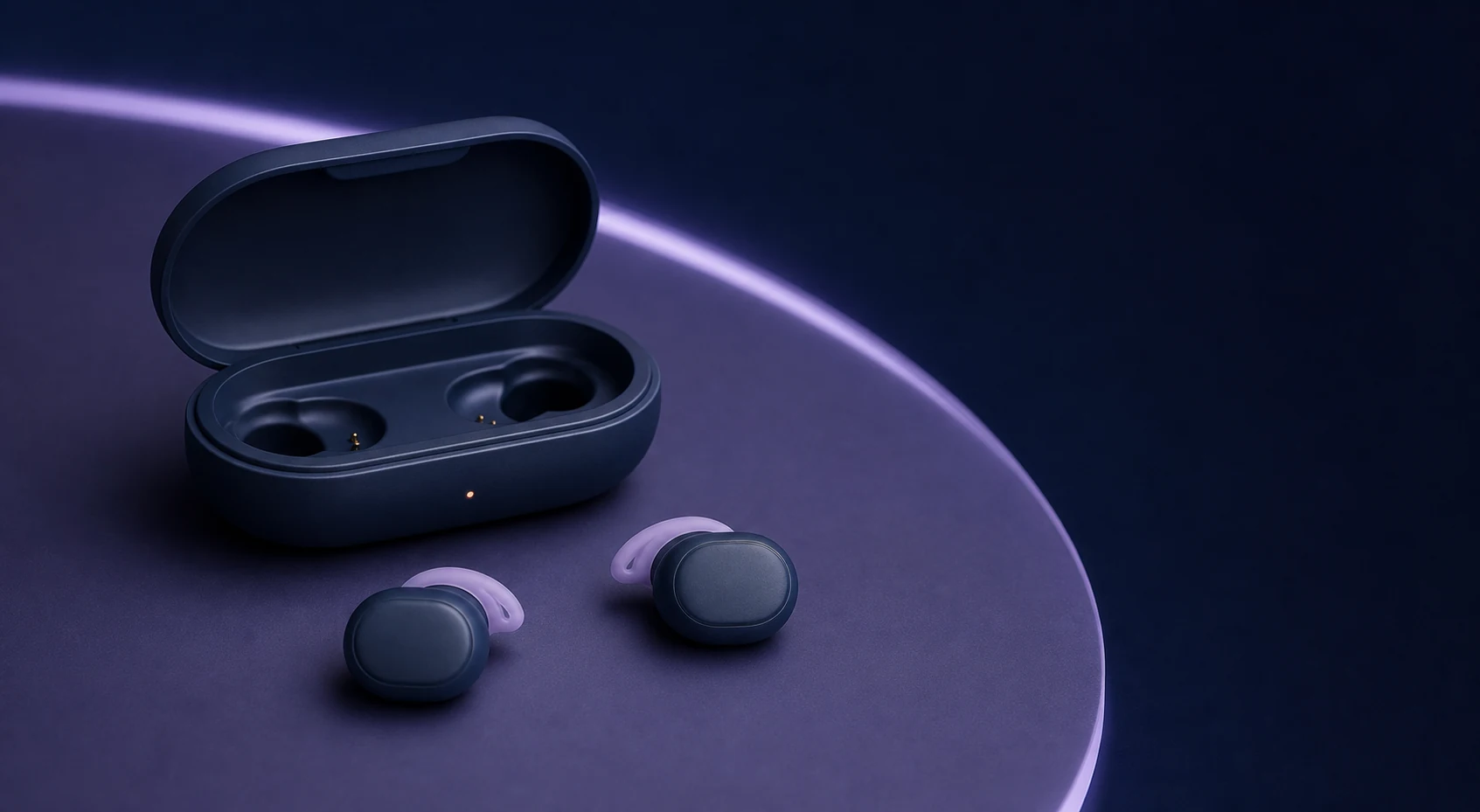
Create sleep earbuds around low pillow pressure, stable overnight fit and simple bedtime controls. Compare miniature shells, soft wings, passive isolation, playback timers, battery targets and private-label packaging before approving a production sample.
US desktop database · Commercial product intent
The US SERP blends product collections and buying guides with safety questions. The strongest page explains side-sleep geometry, realistic noise control and responsible use without presenting the product as medical treatment.
A shallow outer face and soft edge reduce protrusion compared with standard stem earbuds.
Shell depth, tip size and wing pressure must work together across different ears and sleep positions.
Simple volume, timer and prompt behavior helps avoid bright screens and accidental touches.
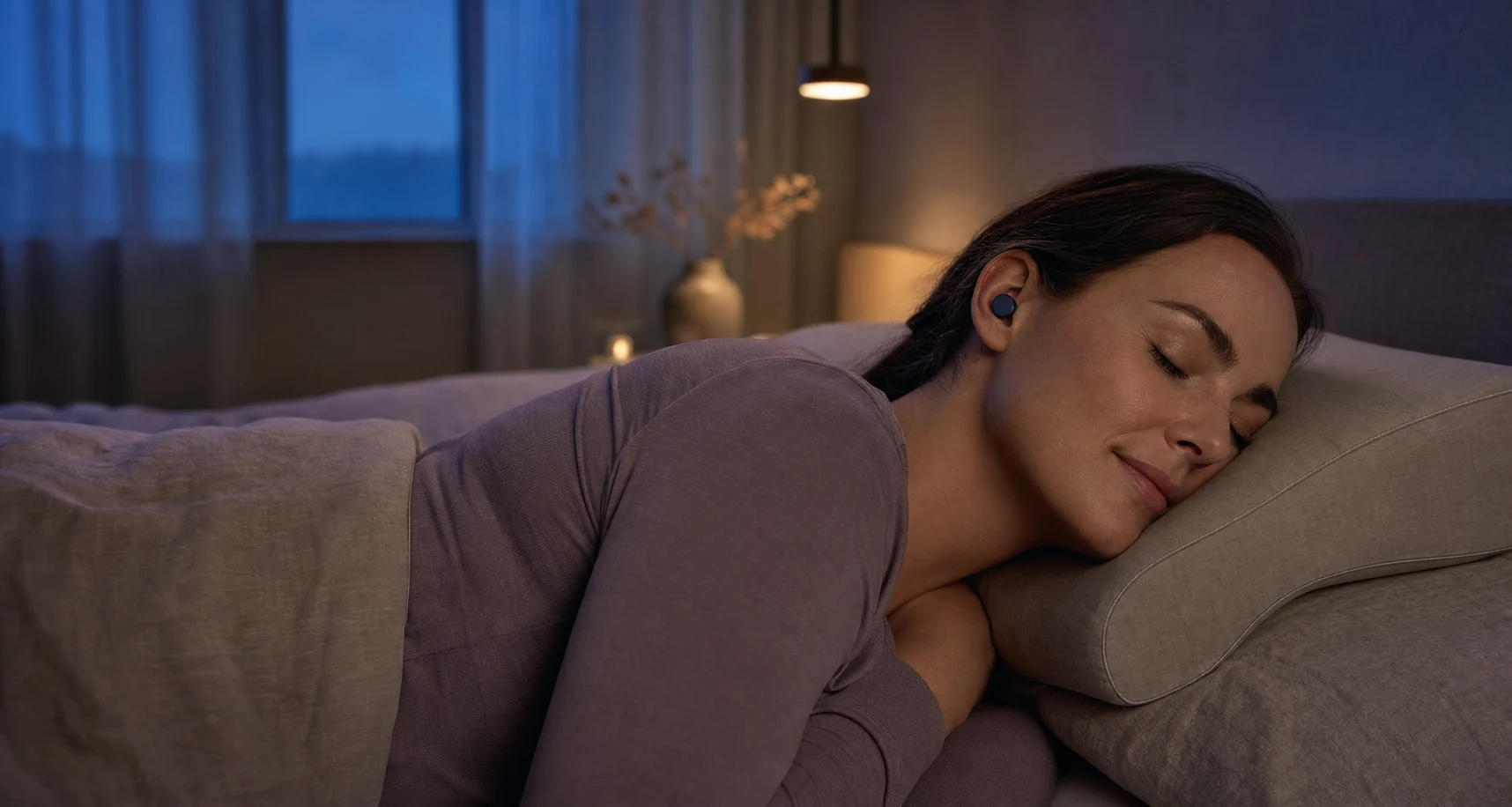
Approve the product with multiple pillows, both ears and several tip sizes. Separate passive attenuation, masking audio and any active noise-control claim, then state the battery method and overnight behavior clearly.
These are sourcing targets, not universal specifications. Lock final values, certificates and claim language to the approved production-intent sample.
| Form factor | Low-profile in-ear sleep platform |
|---|---|
| Fit system | Multiple tips and soft stabilizing wings |
| Wireless platform | Bluetooth 5.3-class options |
| Runtime target | 8–10 hours; confirm playback method |
| Noise approach | Passive isolation; masking / ANC by model |
| Bedtime behavior | Timer, local sounds or streaming options |
| Prompt design | Low-volume prompts and status-light control |
| Customization | Color, logo, tips, case, pack and manual |
Segment by customer job, then select electronics, firmware and packaging. Avoid relabeling one undifferentiated specification across every channel.
Low profile, passive isolation and simple streamed audio.
Timer behavior, calm prompts and local sound options.
Compact case, reliable recharge and broad phone compatibility.
Keep the product story, test evidence and packaging language synchronized as the program moves toward production.
Market, channel, target price, quantity and measurable priorities.
Choose a platform, test fit and behavior, then record changes.
Approve color, logo, prompts, packaging, labels and claims.
Lock the golden sample, inspection points and shipment plan.
Visible answers match the structured FAQ data and keep model-dependent language explicit.
Sleep earbuds are designed with a lower external profile, softer contact surfaces and simpler bedtime behavior. These choices aim to reduce pillow pressure and accidental controls compared with standard stem earbuds.
Some people do, but comfort and listening habits matter. Use the lowest practical volume, keep alarms or important sounds available, maintain clean tips and stop if there is pain or irritation. Seek professional advice for persistent ear concerns.
Results vary. Fit and tips provide passive attenuation, while masking audio can make some sounds less noticeable. Do not describe complete blocking or a fixed reduction unless the selected model is tested under stated conditions.
Test both ears on soft and firm pillows with multiple tip sizes for at least one full sleep cycle. Record pressure, seal changes, wake-ups, battery behavior and accidental controls.
Typical options include housing and case color, logo method, tip assortment, prompts, timer behavior, packaging, manuals, labels and carton marks. MOQ and firmware scope depend on the selected platform.
Share your market, quantity, target price, feature priorities, branding and packaging scope. The form prepares a WhatsApp inquiry for your review—it does not send automatically.
contact@globalvibecart.com
WhatsApp: +86 172 7868 9106
Planning references: Bluetooth SIG specifications, FCC equipment-authorization resources, and European Commission CE-marking guidance.
These references provide planning context; they do not prove that a particular model is certified or compliant. Verify the applicant, manufacturer, model, configuration, standard, date and market scope of each record.
Last reviewed: 26 July 2026. See About, our method, terms, or contact us.